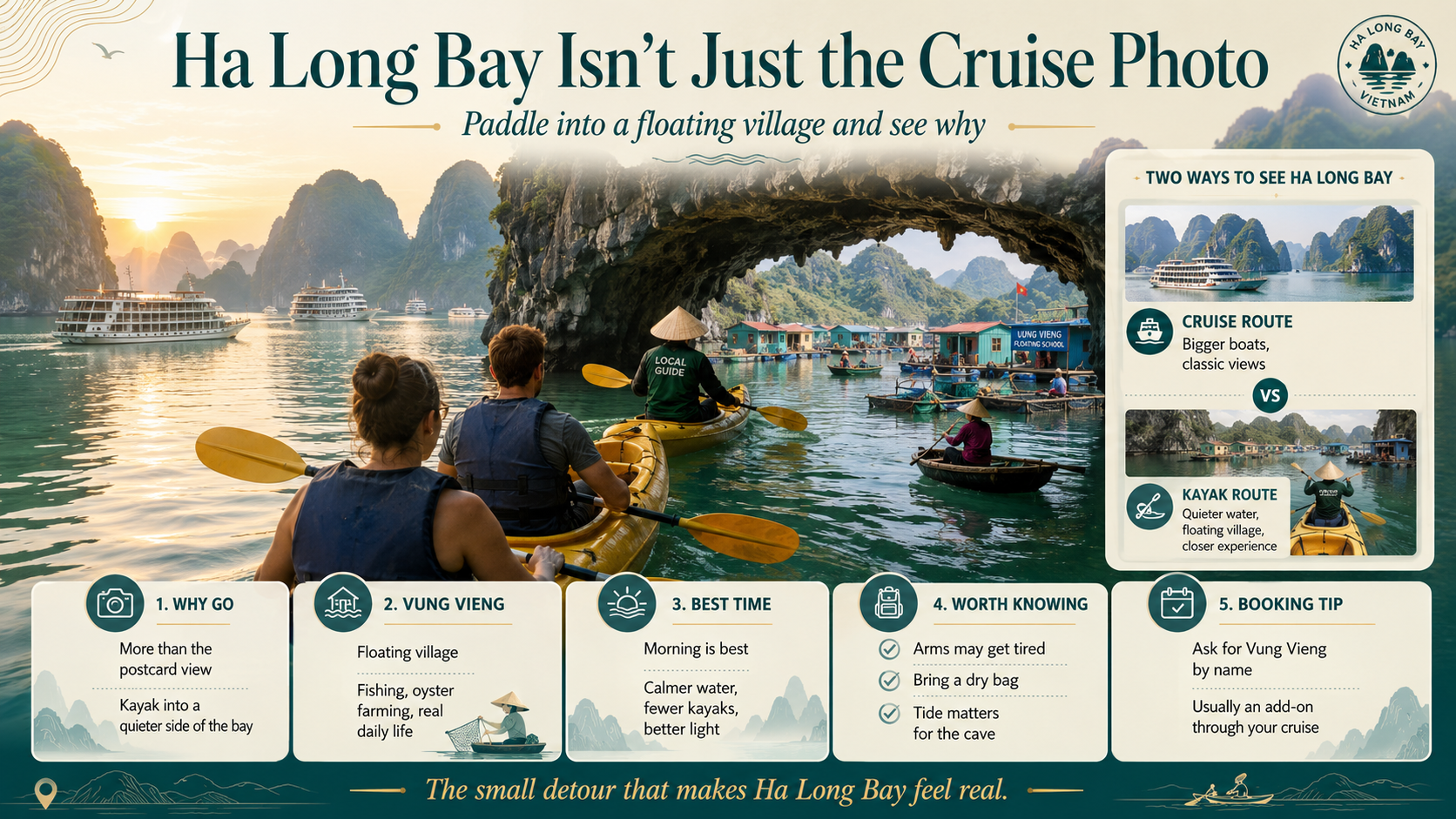
The cruise brochure photo is always the same: a wooden boat gliding between limestone karsts at sunrise. What it doesn't show is the narrow gap between two rock walls where our guide cut the kayak engine and said, "now we paddle." The rock ceiling dropped low enough that I had to lean back flat against the kayak, watching barnacles slide past a few inches above my face.
On the other side was Vung Vieng, a floating fishing village — a cluster of wooden houses bobbing on the water, fish cages strung beneath them, a floating school with kids waving from the porch. No road leads here. The only way in is by boat or kayak, and the bay goes quiet the moment the big cruise engines are out of earshot.
The Cave You Paddle Through, Not Cruise Past
Most big cruise boats stop at Sung Sot Cave, the famous one with the staircase and the lit-up stalactites — impressive, but it's also where every other boat in the bay stops too. Vung Vieng is different — you reach it by kayaking through a low limestone tunnel that's only passable at certain tide levels, ducking your head as the rock brushes past inches above, the water suddenly cold and dark for the ten seconds it takes to clear it.
A Village That's Quietly Disappearing
Vietnam has been relocating some floating villages onshore over the years for environmental and safety reasons, so what's left already feels smaller than it used to be — fewer houses than the photos from a decade ago. The families still here fish, farm oysters, and sell drinks to passing kayaks — it's a real livelihood, not a staged photo opportunity, though that also means it can feel a little awkward paddling through someone's front yard with a camera hanging off your neck.
The Part Nobody Puts in the Brochure
Kayaking sounds romantic until your arms are burning twenty minutes in, the bay can get genuinely choppy in the afternoon wind, and on busier days you'll be sharing the water with a dozen other tour groups doing the exact same route, paddles knocking against each other at the narrow cave entrance. Go in the morning if you can — calmer water, fewer kayaks, and the light on the karsts is better anyway. Bring a dry bag; more than one phone has gone into the bay this way.
Getting There
The floating village add-on usually has to be booked through your cruise operator in advance — not every itinerary includes it by default, and it's typically a modest add-on rather than a separate big-ticket excursion. It's worth asking specifically for Vung Vieng by name, since some boats default to a different, easier-access village closer to the main route.
It's a small detour from the standard cruise itinerary, but it's the difference between seeing Ha Long Bay and actually being inside it. A local guide from Springuu can tell you which boats still run this route — not every cruise package includes it.
Frequently Asked Questions
Is the floating village tour worth adding to a Ha Long Bay cruise?
If you want more than the standard postcard view, yes — it's a quieter, more local side of the bay that most short cruises skip entirely.
Do I need kayaking experience?
No, it's beginner-friendly and usually done in tandem kayaks with a guide, but expect tired arms if you're not used to paddling.
Is the cave passage safe?
Yes with a guide, but it's tide-dependent — at high tide the gap can be too low to pass through safely, so timing matters.
Is it crowded?
Less than the main cruise stops, but on peak days you'll still share the water with other kayak groups, especially in the afternoon.