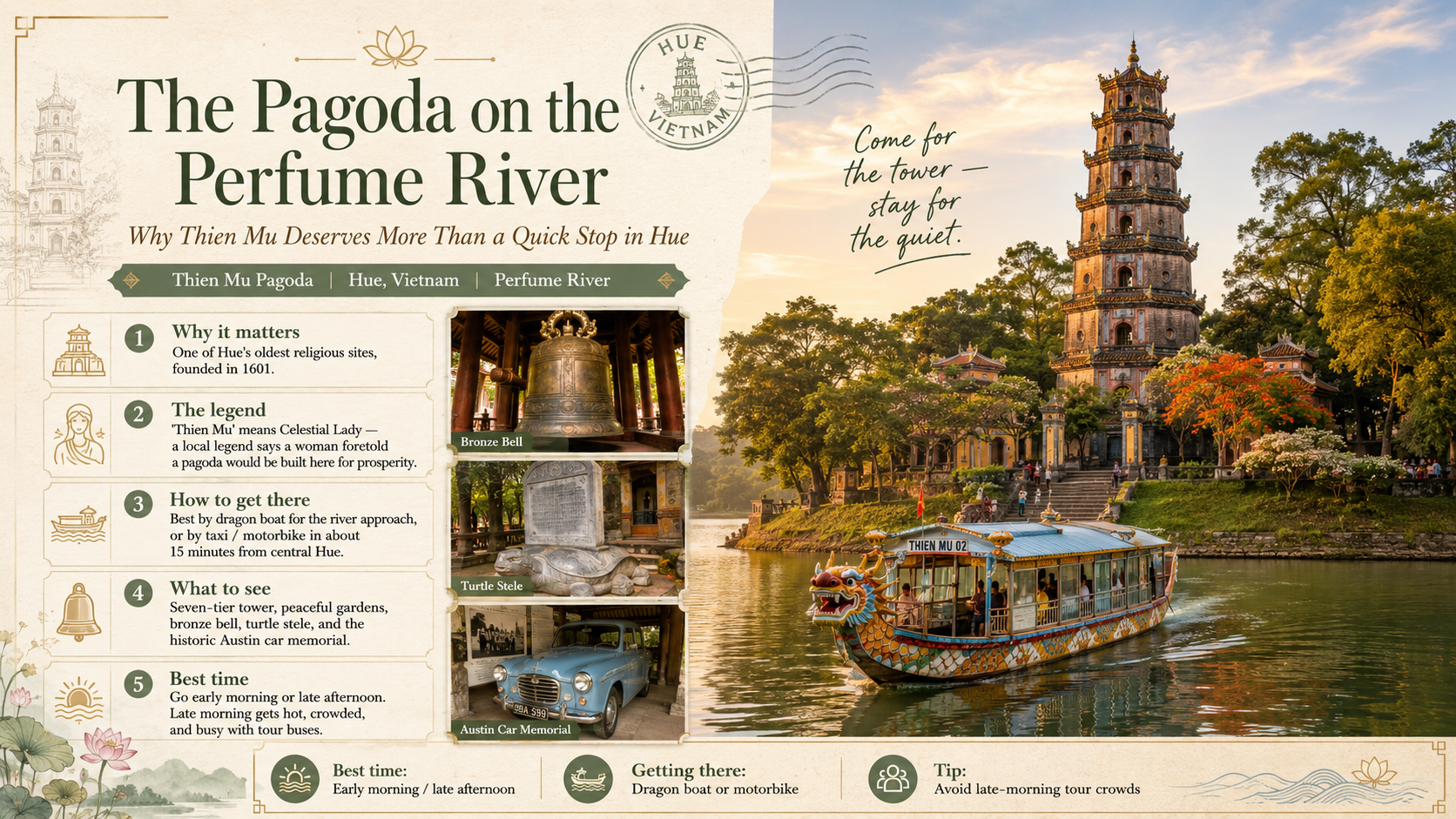
The boat cuts its engine a few hundred meters out, and for a moment all you hear is water lapping against the hull and, faintly, a bell. That's how most people arrive at Thien Mu Pagoda — drifting up the Perfume River at a pace that feels almost rude compared to how fast everything else in Vietnam moves. The seven-tiered tower rises above the trees before the temple itself comes into view, and it's the kind of first impression that makes you put your phone down for a second before you remember to take a photo.
Thien Mu sits on a low hill overlooking the river, a short ride from Hue's city center, and it's one of the oldest religious sites in the city — construction is generally dated to 1601.
View Guide Profiles→
The Legend Behind the Name
"Thien Mu" means Celestial Lady. The story goes that an old woman appeared on this hill and told locals a lord would come to build a pagoda here for the country's prosperity. When Lord Nguyen Hoang heard about it, he built the pagoda on the spot. Whether or not you buy the legend, it's still told this way by the guides and monks who work there today, and it gives the place a weight that a lot of newer temples in Vietnam don't have.
Getting There: Boat or Motorbike
The classic way in is a dragon boat ride along the Perfume River, often combined with a stop at one of the royal tombs. It's slow, and honestly a little touristy, but the approach by water is genuinely the best way to see the tower first. The alternative is a motorbike or taxi straight there, which takes maybe fifteen minutes from the city center and skips the crowds that build up at the boat docks by midday.
What You'll Actually Find Inside
Past the tower, the grounds open into a quiet garden with bonsai trees, a large bronze bell cast in the early 1700s, and a stone stele carried on the back of a marble turtle, a common symbol of longevity in Vietnamese temple architecture. Off to one side, in a small garage-like structure, sits a pale blue Austin car. It's the vehicle that carried the monk Thich Quang Duc to Saigon in 1963, before his death in protest of religious persecution, a pivotal and painful moment in Vietnam's modern history. The monks keep it here as a memorial, not a spectacle, and it's worth pausing at quietly rather than rushing past for a photo.
Being Honest About the Downsides
By late morning, tour buses start arriving in waves and the calm I described at the start disappears fast — it gets crowded, loud, and hot, especially in summer, when Hue's humidity turns brutal well before noon. Go right when it opens, or in the late afternoon closer to sunset, when the light on the river is better anyway and most tour groups have already moved on to the tombs.
If you want someone who actually knows where the good stuff is, the local guides at Springuu are worth talking to — they're Vietnamese, they live here, and they know things that don't show up on any travel blog.
View Local Guides
Guide Prices
English-speaking Guides
Frequently Asked Questions
Is Thien Mu Pagoda worth visiting if I've already seen Hue's Imperial City?
Yes. It's a completely different kind of site, quieter and more spiritual, and the river approach gives you a view of Hue you won't get from the citadel.
What's the best time of day to visit Thien Mu Pagoda?
Early morning or late afternoon. By late morning, tour buses arrive in large numbers and the heat and crowds make it far less peaceful.
How do I get to Thien Mu Pagoda from central Hue?
You can take a dragon boat ride along the Perfume River, or reach it directly by taxi or motorbike in about fifteen minutes.
Read more: The Vietnamese "Pizza" You've Never Heard Of: A Cold Night at Da Lat's Market